How New Zealand quietly pulled off the greatest logistical rowing trick you’ve never heard about
There’s a moment in every good story where someone says:
“That can’t be done.”
Usually politely.
Sometimes with a raised eyebrow.
Often followed by silence.
This is the story of one of those moments.
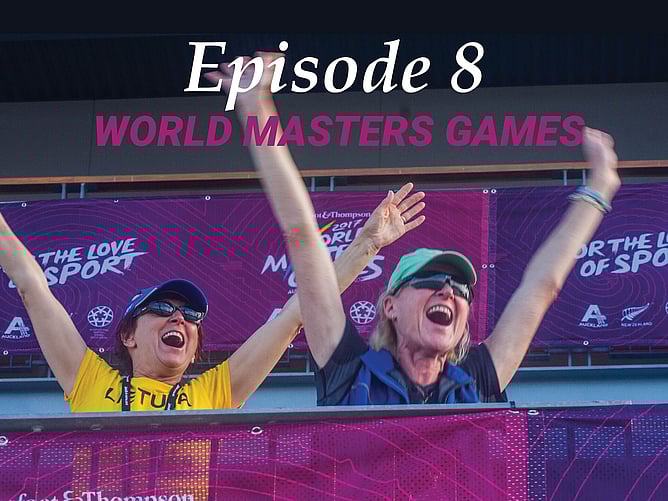
It’s also the story of how New Zealand—without fuss, without headlines, and without importing a flood of offshore boats—hosted one of the most successful rowing operations in World Masters Games history.
And how a fledgling little boatbuilding operation found itself jumping out of a perfectly good plane… with a sewing needle and a parachute still in blueprint form.
The Setup: Last to Know, Last to Be Asked
At the time, Laszlo Boats was still very much the new kid on the block.
We were early-stage.
Freshly independent.
Still finding our feet.
Which explains why we were the last manufacturer to hear about the problem.
Rowing at the World Masters Games has always been… complicated.
Entries open late.
Numbers are uncertain until the very last minute.
And because of that uncertainty, organisers are forced to prepare without knowing how many boats they’ll actually need—or what categories they’ll need them in.
Historically, this had led to the same conclusion, time and time again:
“It’s too risky.”
“The numbers won’t stack up.”
“It’s mission impossible.”
By the time the conversation reached us, everyone else had already opted out.

The Ask: 200 Boats. One Small Country. One Big Risk.
In the absence of a local solution, the only proposal on the table was a commercial agreement for 200 lease boats to be delivered by an overseas supplier.
Let’s pause there for a moment.
Two hundred boats is a serious commitment for any manufacturer.
For an isolated country like New Zealand, with no neighbouring nations to draw equipment from, this meant the solution had to come entirely from within.
For a young New Zealand operation in only its second year under the Laszlo banner, it was enormous.
There were risks everywhere you looked:
A large fleet of offshore loan boats entering New Zealand and never leaving
Long-term market distortion caused by imported equipment remaining in circulation
Financial exposure if entries didn’t materialise
Carrying full-category builds without guaranteed buyers
And yet—there was another risk we couldn’t ignore:
What would it mean for New Zealand rowing if we didn’t solve this?
The Principle: Protect the Market, Protect the Craft
We were deeply conscious that once boats enter the country without a clear pathway out, loopholes appear.
And once loopholes appear, markets lose integrity.
This wasn’t just about Laszlo.
It was about protecting New Zealand manufacturing, local craftsmanship, and long-term trust in the ecosystem.
So instead of importing a solution…
we built one.

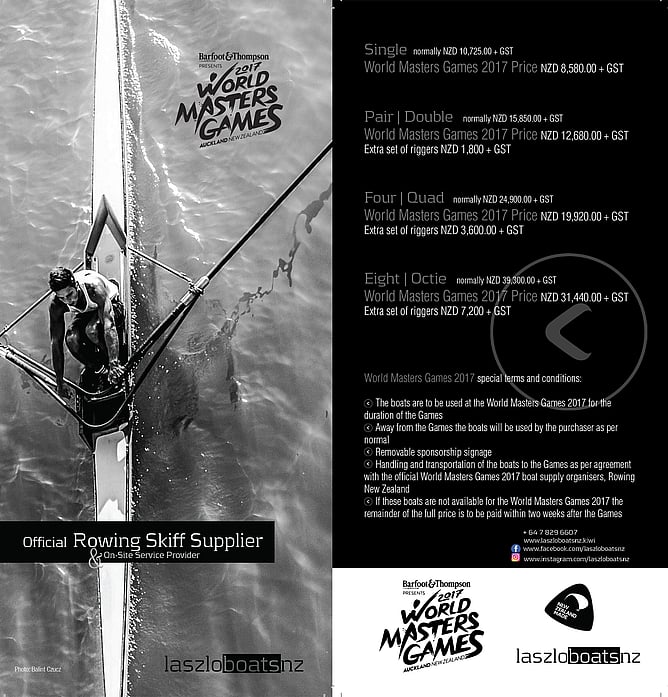
The Laszlo Solution: The World Masters Games Special
We created what became known as the World Masters Games Special.
The idea was simple—but bold.
Participants could purchase high-quality New Zealand-built boats from us
A special price applied
In exchange, those boats would be loaned back to the Games for the event period
Crucially:
This took place post-Maadi, so it didn’t interfere with training or racing schedules
Owners retained pride, provenance, and long-term value
The Games gained a full, reliable boat pool
New Zealand avoided a flood of offshore equipment
And then we did the bravest thing of all.
We committed to building every required category until the boat-pool requirements were fulfilled — whether the boats sold or not.
We also committed to maintaining and repairing the fleet throughout the Games, and to returning every boat safely to its home once the regatta concluded.
For a young operation, this meant carrying significant risk at a time when certainty was unavailable.
It was a leap of faith the size of the Atlantic.
Rowing New Zealand: A Leap of Faith Met With Trust
Rowing New Zealand took a leap with us.
And in return, we offered something radical:
We made the boats available to them—so they could supply the World Masters Games without paying rental fees for 200 boats.
It was collaboration in its purest form.
No ego.
No noise.
Just people solving a problem together.
The Execution: Quiet, Relentless, Thorough
Orders started rolling in.
The workshop stayed busy all season.
The rowing community benefited from reduced pricing on world-class equipment.
And slowly—almost without anyone noticing—
the impossible started looking… organised.
By the time the Games arrived:
All but one boat was covered under the scheme
Repairs were handled during the event
Every boat was returned to its home afterwards
No drama.
No panic.
No excuses.
THE TEAM ON THE GROUND
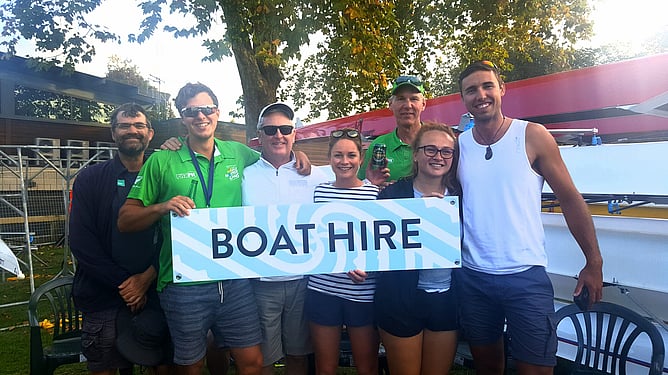
None of this would have worked without the people on the ground.
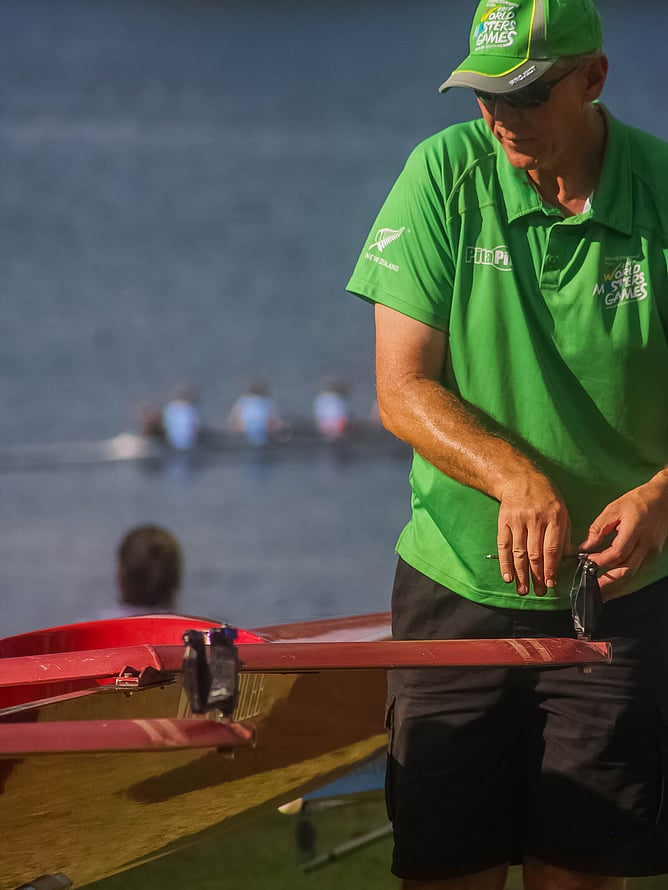
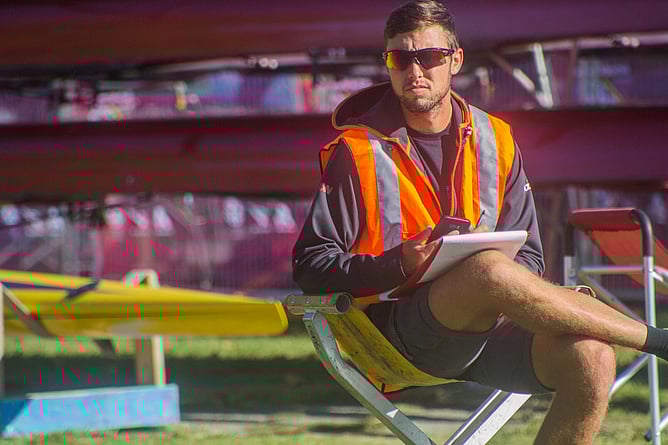
One of the quiet strengths of the World Masters Games was the team of Maadi-seasoned volunteers who stepped up—not just as helpers, but as professionals who understand rowing equipment, pressure, and the rhythm of a regatta.
These were people who had lived through boat-park chaos before.
Who knew that when something breaks, you don’t panic—you fix it.
We worked side by side with them throughout the event, diagnosing and resolving on-site equipment issues as a team. No finger-pointing. No hierarchy. Just shared responsibility and a shared commitment to keeping racing fair, safe, and moving.
They didn’t just support the event—they represented it.
And they did New Zealand proud.
To every volunteer who brought their Maadi experience, long hours, and problem-solving mindset to the World Masters Games—thank you. You were a critical part of why the whole operation worked.
The Result: History, Quietly Made
In the end:
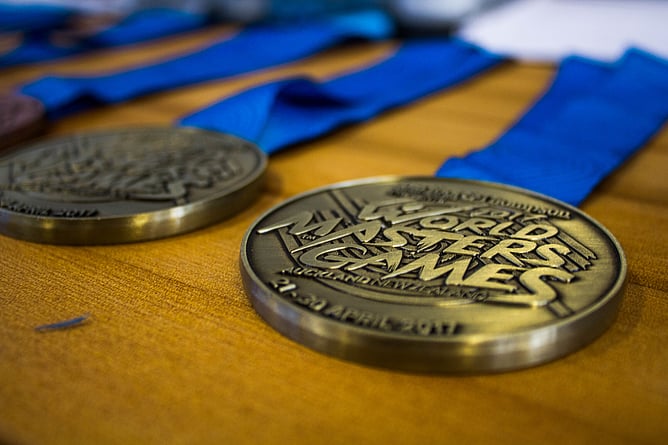
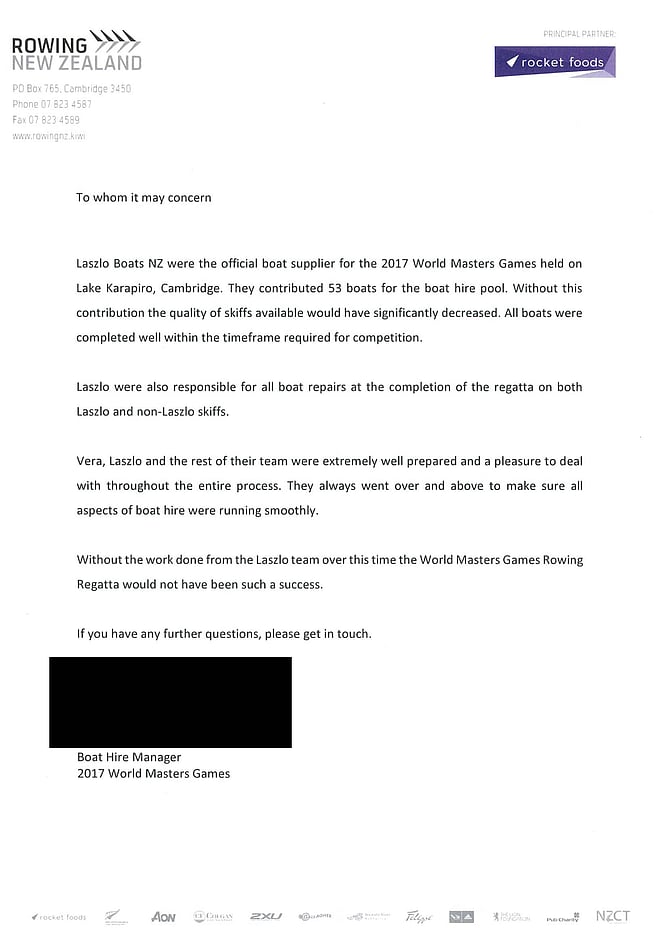
53 out of 117 boats in the pool were supplied by Laszlo
The quality of racing equipment was dramatically higher than previous Games
The regatta ran smoothly
New Zealand delivered something many had said couldn’t be done
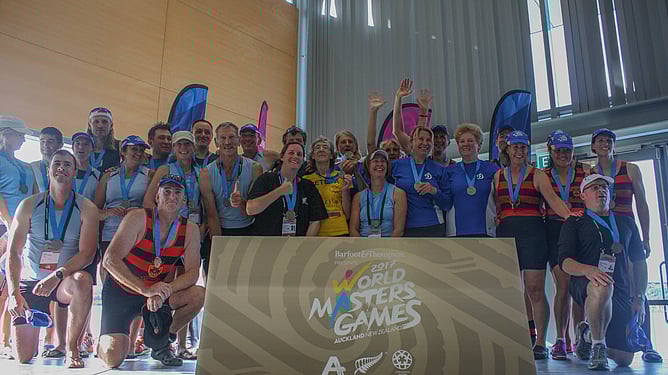
The World Masters Games rowing regatta would not have been the same without this collective effort.
The Lesson: How to Make Mission Impossible… Possible
We learned something important that year.
You don’t make impossible things possible by being fearless.
You do it by understanding risk deeply—and then carrying it deliberately.
Sometimes you jump out of the plane.
But you do it knowing exactly how the parachute will open.
And when it does—
it doesn’t just serve you.
It serves:
your community
your federation
your country
In the process, we tested what it really means to face an obstacle most would step away from—and to do so in a way where the solution strengthens the community, invites participation, and creates shared ownership of the outcome.
If that’s not a small-country, quietly heroic, Tom Cruise–level moment…
Well.
We don’t know what is.
We’re here for rigging and grinning – The Laszloz
(Signing out with the parachute neatly folded, ready for the next jump.)